How I Passed the FAA Part 107 Exam In 24 Hours (Without Paying for a Course)

When I bought my first drone, scaling my photography business wasn’t on my radar. For one, I didn’t have my business formed and hadn’t even purchased a digital camera. Fresh off a break-up, I wanted to learn a new skill and not prevent myself from being able to have an extra income stream in the future by simply not having a certificate in hand.
I started the process and dragged my feet scheduling an exam (and studying) until I unexpectedly landed my dream corporate job. I knew full well that if I didn’t test before my start date, I wouldn’t do it at all. I scheduled my exam and allotted myself 24 hours and 13 minutes to study and sit for the exam - without paying for a $300 course. I’ve never been a good standardized test taker, but do perform well under pressure and that timeline was the incentive I needed to cram everything about aeronautical knowledge with zero background in the industry.
That said, I did not blow off studying and thoroughly went through the test prep described below. Do not take the studying lightly and ensure you use the resources.
Note: FAA requirements and study materials can change. Always verify current information directly with the FAA before taking the exam or operating commercially.
Before You Study
1. Create your IACRA account
You will need an IACRA account to obtain a FAA Tracking Number (FTN) before scheduling your exam. Your FTN is used to identify you throughout the FAA certification process.
2. Schedule your exam
Once you have your FTN, create an account with PSI and schedule the Unmanned Aircraft General - Small (UAG) knowledge test. When scheduling an exam with PSI, you’ll need to use Google Authentication. The testing fee paid prior to scheduling is $175 (originally tested in 2024).
Schedule here: FAA PSI Testing
2. Prepare for the test
Review what you need to show up prepared for the proctored exam. The exam is 60 questions (5 of those are un-scored validation questions). You need 70% to pass the exam.
Identification Requirements: FAA Knowledge Testing Matrix
Test Breakdown: Application Information Bulletin
What I Used to Study
I did not use a paid course. I used the FAA materials below along with free study resources and practice questions. I passed the first attempt.
FAA Remote Pilot Study Guide
Start here. This is the official FAA study guide and covers the material you are expected to know. For planning, it’s 88 pages. This will be the most accurate information you can find from the FAA regarding the test you will sit for.
FAA Airman Certification Standards
This is useful for understanding what knowledge and skills the FAA expects you to have. This includes safety policies and risk mitigation.
Remote Pilot Airman Certification Standards
FAA Airman Knowledge Testing Supplement
Become familiar with this document. This is the book of charts, figures and other information you will use during the test. They can reference specific pages in this test to ask questions about particular airspace.
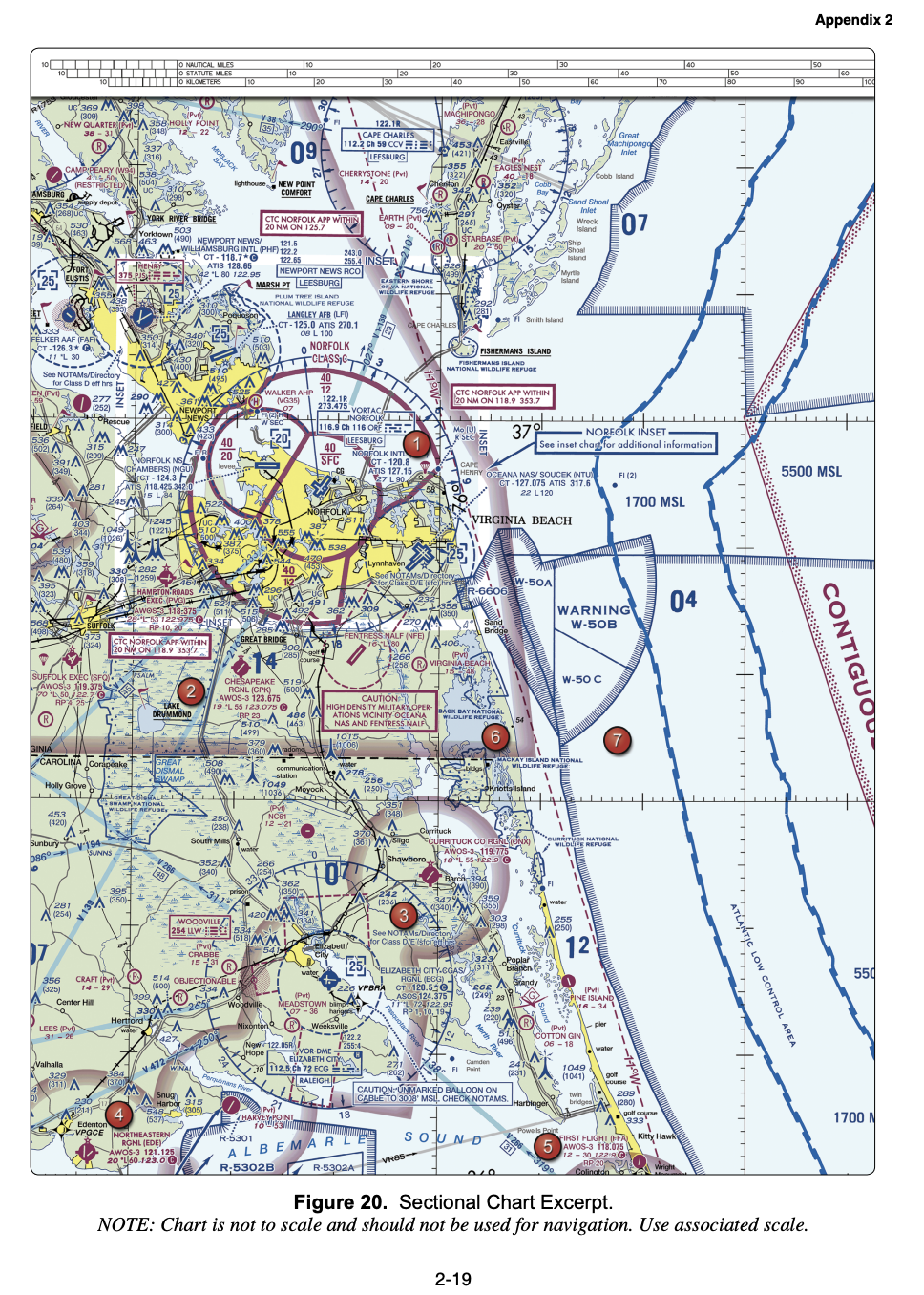
Sample sectional chart from the supplement.
FAA Sample Questions
The FAA provides free sample questions. Look for:
Knowledge Testing → Airman Knowledge Sample Tests (linked out to PSI) → Unmanned Aircraft General - Small (UAG)

Scroll to Knowledge Testing → Airman Knowledge Sample Tests

Search for Unmanned Aircraft General - Small (UAG) → Click Sample Test
Northrup’s Free Part 107 Study Guide
I also used this as a second explanation of the material. Sometimes it helps to have something explained differently than it is in the FAA handbook.
Northrup Part 107 Study Guide
Northrup Video Part 107 Study Guide Recap: Video was originally posted in 2017 and the information is still relevant. There have been updates since, but paired with the FAA study guide resources, you’ll be in good shape. I listened to this recording on the way to sit for the exam.
What I Would Focus On
If you’re starting from zero like I was, don’t let the amount of information overwhelm you. Focus on content areas that are most heavily weighted if you are short on time; however, like all federal run programs there are discrepancies you’ll find when reviewing content coverage. The first screenshot is most recently updated document:
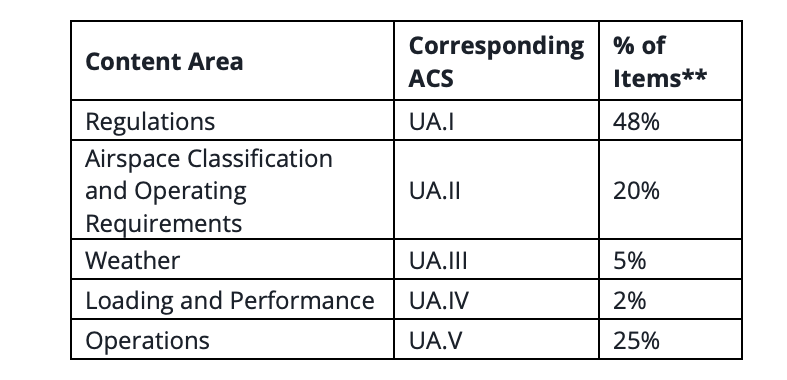
Per FAA PSI, updated in 2025 as a breakdown of test items
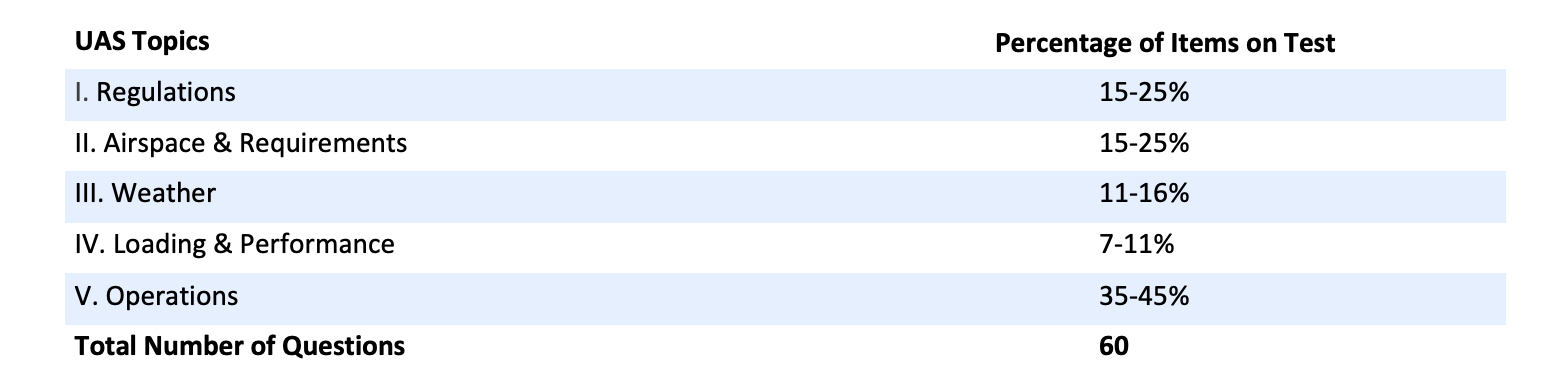
Per FAA, updated in 2021 this is the breakdown of test items
Here’s what I focused on that helped me pass the test:
Airspace classification and interpreting sectional aeronautical charts
Weather patterns and the effects on small unmanned aircraft systems
Part 107 regulations and pilot performance
Airspace authorization, communication, and LAANC
Operations: hazards, flying at night, flying over people, and risk management/maintenance
Loading and performance of UAS
Practice questions are important. They helped me figure out what I actually knew versus what I thought I knew. I recommend fully watching an introduction video (free on YouTube) and then immediately take a practice test to see where you need to focus most of your time studying.
Before You Go to the Test
Bring a government-issued photo ID. You’ll receive the testing supplement at the testing center, but you should already be familiar with it before you go. You have two hours to complete the exam and need 70% or higher to pass. Here are the links you’ll need to review prior to showing up for the exam as mentioned above:
Identification Requirements: FAA Knowledge Testing Matrix
Test Breakdown: Application Information Bulletin
After You Pass
Keep the printed document you receive from the testing center. You’ll need information from it when completing your application through IACRA.
After you pass, complete the FAA Form 8710-13 application through your IACRA account. Your temporary certificate should become available while your permanent certificate is processed and mailed. The temporarily certificate became available one week after passing the exam.
What It Cost Me
I paid for the FAA knowledge test ($175) and $0 for study materials. There are plenty of paid Part 107 courses out there. I don’t have any experience with them to have an opinion, but I personally chose to put funds toward camera equipment, insurance, and software to run my business instead of the course.
One Last Thing
Getting your Part 107 certificate is only the beginning. Practice, learn your equipment, and make sure you’re drone is registered with the FAA if you are using it for commercial use. You’ll also have to renew your Part 107 every two years (for free). It’s a course and an exam that you can enroll in here.
Do you have a resource that helped you pass? Leave it in the comments or send it my way. I’ll add useful resources to this list as I find them.
This post documents my personal study experience and is not a substitute for current FAA regulations or guidance. Always verify current requirements directly with the FAA.